Books for Microsoft Access
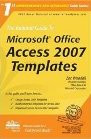
The Rational Guide to
Microsoft Office Access 2007 Templates
by Zac Woodall, Microsoft Corporation
Our friend Zac Woodall is a Program Manager and lead developer on the
Microsoft Access 2007 development team. In this book, he shares
his experience and provides templates to create tracking
applications incorporating the rich user interface of Access
2007. In particular, the design, creation and sharing of Access
2007 templates.
Topics include customization, personalization, branding, and
working with SharePoint. Advanced topics include template file
anatomy, template collections, enterprise templates, generating
templates without running Access, and integrating templates with
add-ins.
The book includes sample code, sample templates, and a bonus
chapter on how to install and use .accfl field template XML
files to customize the Access Field Templates task pane. Learn
from one of the best Access 2007 experts. You can even get it
for free! |
More info and
Free Offer!

 |
Mastering Access Development
by Alison Balter Written by our dear friend Alison who is a well
known writer, presenter, and trainer in the Access community, these books
target power users and beginning developers.
They're great for getting you up-to-speed immediately so you can use Access
more productively. Alison's book takes a highly technical topic and presents it in a manner
that is easy to comprehend. You'll want to read it from cover to cover, but
it can also act as an excellent reference. Learn thorough knowledge of
Access application development, real-world solutions to specific development
and programming problems, and professional programming techniques backed by
concise, no-nonsense explanations of the underlying theories. Debugging and
troubleshooting methods are also included.
Alison's reviews several FMS's
products in the section "Third-Party Tools that Can Help You
Get Your Job Done"
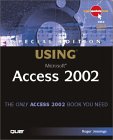
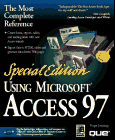
Special Edition Using
Microsoft Access (Technical Editor: FMS's Jim
Ferguson)
by Roger Jennings An authoritative guide to mastering the essential facets of Access's
powerful 32-bit development platform. Detailed, step-by-step instructions
guide the reader through the process of designing and using Access tables,
queries, forms, and reports. Chapters on VBA techniques pave the reader's
way to Access programming.
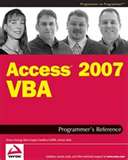
Access 2003 VBA:
Programmer's Reference (Contributions from FMS's Steve
Clark)
by Patricia Cardoza, Teresa Henning, Graham Seach, Armen
Stein
This book shows you how to take control of Access 2003 or 2002
using VBA. You’ll learn to create and name variables, use DAO
and ADO to manipulate data, handle errors correctly, create
classes and use APIs, and more. An entire chapter is devoted to
the changes in Access 2003, including new wizards and GUI
features that previously required VBA code as well as new VBA
features. You will discover how to access data with VBA, execute
and debug VBA code, and use VBA with Access objects. Finally,
you will learn more about the relationship between Access and
SQL Server, and how to use VBA in Access to control and enhance
other Office applications. |

 |
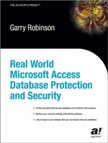
Real World Microsoft Access
Database Protection and Security
by Garry Robinson
This book focuses on issues
that help protect your database. Written from an experienced developer's
point of view, the author discusses protection and security task-by-task.
This book is even recommended among Microsoft TechNet Security Topics:
Threats and Countermeasures.
You will learn to hide tables
as system tables, produce databases difficult to crack, and back up
databases. You will learn how to keep staff from viewing salary tables,
prevent customers from peeking at your distributed software design, and
become a better judge of worthwhile security options (versus time-consuming
choices). |

 |
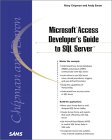
Microsoft Access Developer's Guide to SQL
Server
by Mary Chipman, Andy Baron Microsoft Access Developer's Guide to Microsoft SQL Server provides
much needed information and guidance for the Access power user or developer
who wants to exploit the power of SQL Server. Written by Access experts and
Microsoft MVPs Mary Chipman and Andy Baron, this hands-on guide provides you
with the practical knowledge you need to harness the enterprise-level power
and scalability SQL Server offers, while using the Access tools you are
familiar with. More than just a migration guide, you will benefit from the
authors' expert discussions of topics including the new Microsoft Database
Engine (MSDE), Transact SQL, building stored procedures and views,
converting your applications to SQL Server, working with SQL Server
security, and building Access interfaces to SQL Server databases. |

 |
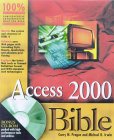
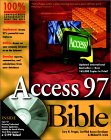
Microsoft Access Bible Editions
by Michael R. Groh, Joseph Stockman, Gavin Powell, Cary Prague,
Michael Irwin, Jennifer Reardon This perennial favorite was completely
rewritten by our dear friend Michael Groh for Access 2007. Michael
is the former editor of Access Advisor and has a wealth of experience
developing Access applications, along with his coauthors.
These books offer step by step instructions and practical examples and advice that
equips you with everything you need to know to organize, present, analyze,
and share data on a network. CD-ROM included.

2007 Version
 |

2003 Version
 |

2002 Version
 |
2000 Version
 |
97 Version
 |
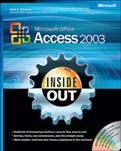
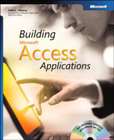
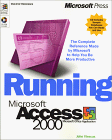
Microsoft Office Access Inside Out,
Building Microsoft Access Applications, and
Running Microsoft Access
by John L. Viescas
A comprehensive reference that takes readers through the most used
tasks and functions of the software. Easy to use, the book has a
friendly, open design that features copious screen shots, call-outs,
cross-references, and tips.
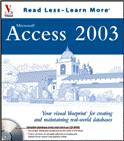
Access 2003 : Your visual blueprint for creating and maintaining real-world
databases
by F. Scott Barker
This is the only guidebook series that takes a visual approach to
professional-level computer topics. You will discover step-by-step screen
shots that demonstrate over 140-key techniques to help you make the most of
Access 2003, including: building
charts and graphs, setting up database relationships, writing and using
classes, managing databases, and more ... |

 |
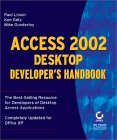
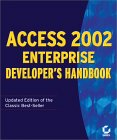
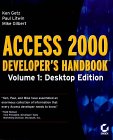
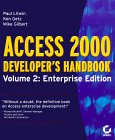
Access Developer's Handbooks
by Paul Litwin, Ken Getz, Mike Gilbert
Here's the book FMS recommends for anyone who wants to be a serious Access
Developer. It includes the tips and techniques necessary for being an
advanced Access developer. We know Paul, Ken, and Mike personally and can
vouch for their knowledge of developing sophisticated Access applications.
Get their expertise for a fraction of the price you would have to pay to
hire them as consultants. This must read book is packed with tips, tricks, secrets, undocumented
features, and tons of reusable source code. This indispensable guide is your
ticket to developing bulletproof applications. Learn how to build more
efficient databases, design better user interfaces, develop client/server
applications, and plan for interoperability. The companion CD includes all
examples from the book, a library of reusable code, ready-to-use subroutines
and user interface objects, and great freeware and shareware utilities. Developers will want to sit by their computers with this edition--the best
available and most comprehensive. It is packed with reusable code, advanced
techniques, and insider tips from the leading Access experts. The CD
includes all examples from the book including the databases, a code base of
reusable code, and subroutines and user-interface objects ready for
immediate use.
Access Developer's Handbook Sets (Contributions from FMS's Luke Chung)
by Paul Litwin, Ken Getz, Mike Gilbert
If you are serious about being an Access developer, you need to read these
books. Without them, you'll waste countless hours trying to do things you
can look up. Discover how to create databases the Access way. Your life will
be a lot simpler if you know how.

2002 Version
 |

2000 Version
 |

97 Version
 |
THE Book for the Microsoft Jet Database Engine
Microsoft Jet Database Engine Programmer's
Guide
by Dan Haught and Jim Ferguson This is the official technical reference on Microsoft Jet, the powerful
database engine used in Microsoft Access and Microsoft Visual Basic. If you write code that creates and manipulates a database in one
of these products, you can easily use that same code in the other, or use
both products together to create custom database applications. You'll learn
what Jet is, how to use it, and how it compares to other database engines.
Each chapter includes a simple Visual Basic program that is built upon to
illustrate points throughout the discussion. |

 |

Books for Microsoft SQL Server
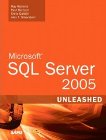
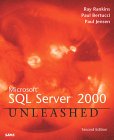
Microsoft SQL Server Unleashed (2nd
Edition)
by Ray Rankins, Paul Bertucci, Chris Gallelli, Alex T. Silverstein
Microsoft SQL Server Unleashed offers a variety of topics for
system and database administrators to help them learn new features of the
product and to solve problems they face on a daily basis. It shows them how
to build upon their working knowledge of the product and take their
experience and knowledge to a higher level. This new edition of Microsoft
SQL Server Unleashed covers the latest updates and service packs to SQL
Server 2000 or 2005, including full support for XML, notification services, and SQL
Server CE. |

 |

 |
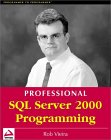
Professional SQL Server Programming
by Rob Vieira
In addition to providing a thorough treatment of SQL Server 2000
development, Rob Vieira's extensive reference also devotes quite a lot of
space to covering SQL in general and issues relating to database design.
Included is a complete introduction to Transact-SQL and an excellent chapter
on normalization that will help demystify an over-referenced but much
misunderstood database design concept. There is also in-depth information on
the new features of SQL Server 2000, including indexed views, user-defined
functions, and support of XML. |
 |

Books for Microsoft Visual Studio .NET
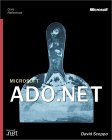
Microsoft ADO.NET (Core Reference)
by David Sceppa
This core reference demonstrates how to use ActiveX Data Objects.NET (ADO.NET)
to access, sort, and manipulate data in enterprise-wide, Web-enabled
applications. Readers learn best practices for writing, testing, and
debugging database application code using the new tools and wizards in
Microsoft Visual Studio .NET-with code on a companion CD, plus insider tips.
The book also describes the ADO .NET object model, its XML features for Web
extensibility, integration with Microsoft SQL Server 2000, and more. |

 |
Professional UML with Visual Studio .NET
by Tony Loton, Kevin McNeish, Andrew Filev, Ben Schoellmann
If you want to use Visio to create enterprise software, this is the book for
you. The integration of Visual Studio .NET Enterprise Architect and Visio
for Enterprise Architects provides a formidable combination. Visio offers
powerful diagramming capabilities, including such things as creating UML
models, mapping out databases with Entity Relationship diagrams, and aiding
the development of distributed systems. Its integration with Visual Studio
.NET Enterprise Architect means that C# or Visual Basic .NET code can be
generated from the UML diagrams, and Visual Studio .NET projects can be
reverse engineered to UML models. For the developer already familiar with
UML and looking to get the best out of Visio, the Visual Studio .NET and
Visio for Enterprise Architects combination is weakly documented, and the
quality information needed to realize the time-saving features of Visio just
doesn't seem to be available, until now. This book presumes that you are
already familiar with the basic concepts of UML notation - this book will
not teach you UML. Instead, this book will take you forward into the Visio
environment, showing you how to make the most of its software-related
features.
|

 |
Refactoring: Improving the Design of
Existing Code
by Martin Fowler, Kent Beck (Contributor), John Brant (Contributor),
William Opdyke, Don Roberts Your class library works, but could it be better? Refactoring: Improving the
Design of Existing Code shows how refactoring can make object-oriented code
simpler and easier to maintain. Today refactoring requires considerable
design know-how, but once tools become available, all programmers should be
able to improve their code using refactoring techniques. Besides an introduction to refactoring, this handbook provides a catalog of
dozens of tips for improving code. The best thing about Refactoring is its
remarkably clear presentation, along with excellent nuts-and-bolts advice,
from object expert Martin Fowler. The author is also an authority on
software patterns and UML, and this experience helps make this a better
book, one that should be immediately accessible to any intermediate or
advanced object-oriented developer.
|

 |
Shared Source CLI Essentials
by David Stutz, Ted Neward, Geoff Shilling
Microsoft's Shared Source CLI (code-named "Rotor") is the publicly available
implementation of the ECMA Common Language Infrastructure (CLI) and the ECMA
C# language specification. Loaded with three million lines of source code,
it presents a wealth of programming language technology that targets
developers interested in the internal workings of the Microsoft .net
Framework, academics working with advanced compiler technology, and people
developing their own CLI implementations. The CLI, at its heart, is an
approach to building software that enables code from many independent
sources to co-exist and interoperate safely. Shared Source CLI Essentials is a companion guide to Rotor's code. This
concise and insightful volume provides a road map for anyone wishing to
navigate, understand, or alter the Shared Source CLI code. This book
illustrates the design principles used in the CLI standard and discusses the
complexities involved when building virtual machines. Included with the book
is a CD-ROM that contains all the source code and files.
|

 |
Programming Microsoft Visual Basic .NET
(Core Reference)
by Francesco Balena
Useful for VB developers of all levels, Programming Microsoft Visual Basic
.NET offers a massive and comprehensive guide to the new VB .NET. While
concentrating on "traditional" programming techniques brought up to speed
with .NET, this book also covers essential Web development, making it a
solid choice for those making the leap from VB 6.
|

 |
Mastering Visual C# .NET
by Jason Price, Mike Gunderloy
C# is Microsoft's brand-new object-oriented language for the .NET platform,
designed to make it easy for developers to create Web applications.
Mastering Visual C# .NET is aimed at experienced C++, Visual Basic, and Java
programmers who want a comprehensive resource to Visual C#. It delivers
complete coverage of the essentials of the C# language, plus writing Windows
and web applications. Topics include using the .NET base class library for
basic programming operations like I/O and threads; database programming with
ADO.NET; Web programming with ASP.NET; and creating XML Web Services. There
is also a chapter on programming security with C#, including permissions and
encryption. Author Jason Price has more than ten years' experience in the
software industry and has worked with C#, .NET, Java, and Oracle. Coauthor
Mike Gunderloy has written numerous books on Microsoft programming topics
for Sybex, including ADO and ADO.NET Programming and .NET E-Commerce
Programming. |

 |
ASP.NET Developer's JumpStart
by Paul D. Sheriff, Ken Getz
The purpose of ASP.NET JumpStart is to show readers the practical
applications of .NET and ASP.NET by illustrating how to build Web-based
applications using Web Forms and Web Services. Emphasis will be on good
programming standards and practices. The reader will be taken from an
introduction of the VB .NET language to intermediate topics through a
step-by-step approach, which gives the reader the opportunity to try out the
practices presented in each chapter. |

 |
Professional ASP.NET Server Controls: Building
Custom Controls w/ C#
by Matt Butler, Thiru Thangarathinam, Matt Milner, Michael Clark, Ryan
O'Keefe, Angelo Kastroulis, Jan Narkiewicz, Daniel Cazzulino This book is designed to be a complete reference on how to create Custom
Server Controls using C#. In essence, it's a definitive guide to what
they're used for, how they are created, and the benefits that they can
provide. The first part of the book will be concentrating on the code
itself, and is designed to be editor-neutral, concentrating on the raw code
involved in creating controls and making use of these controls. The second
part of the book will have more coverage of visual designers like Visual
Studio .NET, talking about why using IDEs is so helpful, and examining the
powerful features of Visual Studio .NET that are useful when creating custom
controls. |

 |

Books for Microsoft Visual Basic
Database Developer's Guide with Visual
Basic 6 (Technical Editor: FMS's Jim Ferguson)
by Roger Jennings
A perennial best-selling title for VB Database application, this is a "must
buy" for all serious VB developers. The book has been completely updated for
the latest release of VB, ActiveX controls, Microsoft's new Internet
database technologies, and Microsoft's newest client server technology:
Microsoft Transaction Server. The CD features source code and demonstration
databases. |

 |
Hitchhiker's Guide to Visual Basic and SQL
Server (Technical Editor: FMS's Jim Ferguson)
by William R. Vaughn
A hands-on resource for developers, development managers in medium-sized to
large MIS development shops, and everyone else who wants to use Visual Basic
to tap the power of SQL Server. The enclosed CD-ROM contains sample code
from the book, a sample database, code "building blocks" for users' own
applications, white papers, and more. Focusing on Visual Basic 6's new data-access resources, this is the
definitive guide to Microsoft's database development tools. If you're
concerned with creating a way for a Visual Basic application or control to
talk to an SQL Server back end, this book most likely has the answers you
need. |

 |
|